
Early Years Education in Hungary: What Expat Families Need to Know
Relocating with a young child compresses every worry into a single question: How do I keep my child safe and settled when nothing else feels familiar? Early years education in Hungary is often where those fears either begin to ease—or quietly intensify.
Through its relocation work, Inter Relocation supports international families at this exact moment of uncertainty. Because early years education in Hungary plays such a central role in how relocation is experienced, Inter Relocation’s owner Stuart McAlister spoke with Petra Kim from Happy Kids International Kindergarten and Nursery, an English-language early years institution in Budapest, to gain professional insight into how the system works in practice and what genuinely matters for expat parents.
This article explains how early years education in Hungary works in practice and highlights the points international parents most often need to understand when choosing a nursery or kindergarten during relocation.
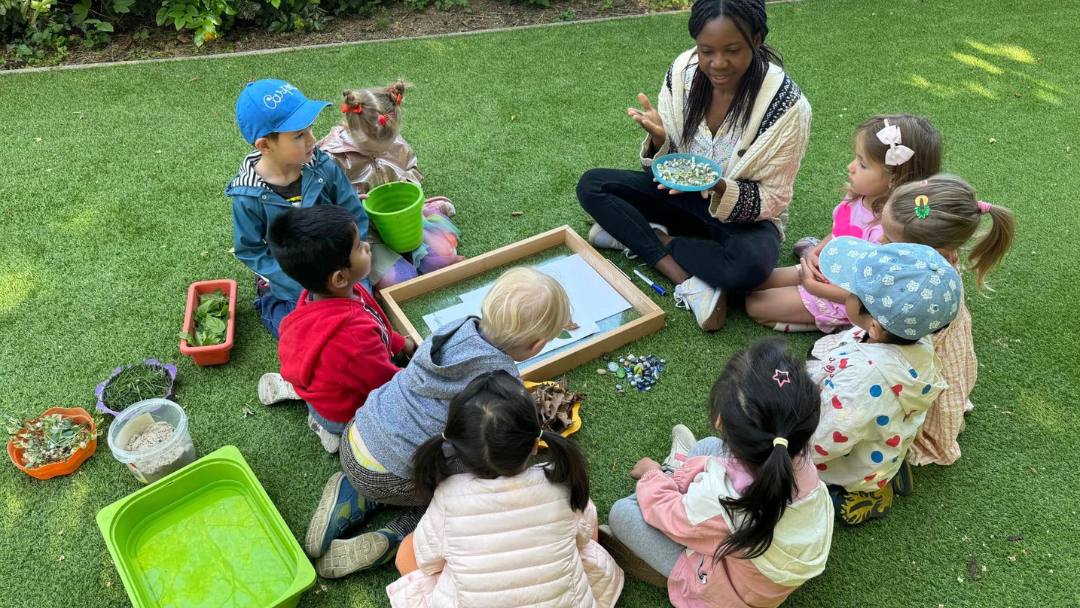
A typical small-group activity at Happy Kids, illustrating how early years education in Hungary supports children through structured play and routine.
When Can Children Start Nursery in Hungary?
In Hungary, nursery care—known as bölcsőde—is available from infancy until the age of three. Legally, children may attend nursery from six months of age, although most families choose to enroll between eighteen months and two and a half years.
For families relocating to Hungary with children, timing is rarely ideal. Moves often happen mid-year or outside the academic calendar. While public nurseries operate with fixed intake periods, private international nurseries typically allow greater flexibility, which can be especially important for expat families settling into Budapest.
Understanding Nursery Readiness in Hungary
Readiness for nursery is rarely about ticking boxes. It is shaped by temperament, emotional development, and the wider context of relocation itself.
Children often settle more smoothly when they show curiosity about new environments, some tolerance for short separations, and a growing comfort with routine. Early communication—whether verbal or non-verbal—also supports adjustment during the transition.
Kindergarten in Hungary: Legal Requirements for Expat Families
Hungarian law requires children to attend kindergarten (óvoda) from the September following their third birthday. Attendance is mandatory for at least four hours per day and applies equally to Hungarian and international families.
International kindergartens operate within this legal framework, provided national standards are met. The focus of kindergarten in Hungary remains on play, emotional development, and social readiness rather than formal academics. Children typically remain in kindergarten until the age of six or seven, depending on individual school readiness.
Understanding these requirements early helps families avoid last-minute pressure and allows childcare decisions to align more naturally with housing and work arrangements.
Hungarian and Anglo-Saxon Early Years Approaches
Although there is philosophical overlap, structural and cultural differences are important to understand.
Hungary clearly separates nursery care from kindergarten education, while Anglo-Saxon systems often introduce preschool later and incorporate academic elements earlier. Early years education in Hungary traditionally prioritises emotional security, predictable rhythm, independence, outdoor activity, and learning through play.
International nurseries often combine Hungarian expectations with global frameworks such as EYFS, Montessori, or Reggio Emilia. For many expat families, this blended approach provides both familiarity and continuity during transition.
Why Early Years Education Matters During Relocation
From a relocation perspective, childcare is never an isolated decision. It shapes how quickly a child feels safe—and how supported parents feel in the process.
A stable early years environment offers children emotional anchors at a time when most other reference points are shifting. Predictable routines help reduce anxiety, while play allows children to process unfamiliar experiences without pressure.
When children feel emotionally secure in childcare, parents are often better able to focus on work, administration, and rebuilding daily life in Hungary.
Choosing a Nursery or Kindergarten as an Expat Family
For international families arriving in Budapest, the right early years setting can significantly influence the overall relocation experience.
Environments that prioritise emotional well-being, maintain clear communication with parents, and employ trained educators tend to support smoother transitions. A child-centered philosophy combined with cultural sensitivity helps children integrate socially while preserving a sense of stability during change.
Early Years Education in Hungary and the Realities of Relocating with Children
Relocating with a young child rarely allows for perfect timing or complete certainty. Most parents are simply trying to make choices that feel steady and protective in the middle of change.
Understanding how early years education in Hungary actually works gives families something solid to hold onto. When expectations are clearer, decisions tend to feel less overwhelming. For many expat parents, early years education becomes the first daily environment where their child begins to feel safe again—and that sense of safety often carries over into the rest of family life.
An Example from Practice: Insights from an International Nursery
A little more about Happy Kids International Kindergarten and Nursery, an English-language early years institution working with a diverse international family base in Budapest.
Their approach places strong emphasis on emotional safety and predictable daily rhythms, particularly for children experiencing major transitions such as relocation. Rather than prioritising early academic outcomes, the focus is on helping children feel secure, recognised and emotionally supported within a new environment.
Learning is framed as something that develops through play, relationships, and everyday interactions, with close cooperation between educators and parents. In an international setting, this kind of structure can be especially valuable for children adjusting to new languages, routines, and cultural expectations.