
How to Choose a Nursery or Kindergarten in Budapest: A Practical Guide for International Families

Relocating with young children changes the weight of every decision. Housing matters. Commute matters. But for many families, the most emotionally charged question becomes this:
Where will my child spend their days—and will they feel safe there?
Choosing a nursery or kindergarten in Budapest is rarely just about education. It shapes how quickly a child settles, how predictable daily life becomes, and how supported parents feel during transition.
Through its relocation work, Inter Relocation frequently supports families at this stage of decision-making. To add early years expertise to this perspective, Stuart McAlister spoke with Petra Kim, School Director of Happy Kids International Kindergarten and Nursery in Budapest, about what international parents should realistically consider.
This article brings together relocation insight and early childhood expertise to help families make informed, steady decisions.
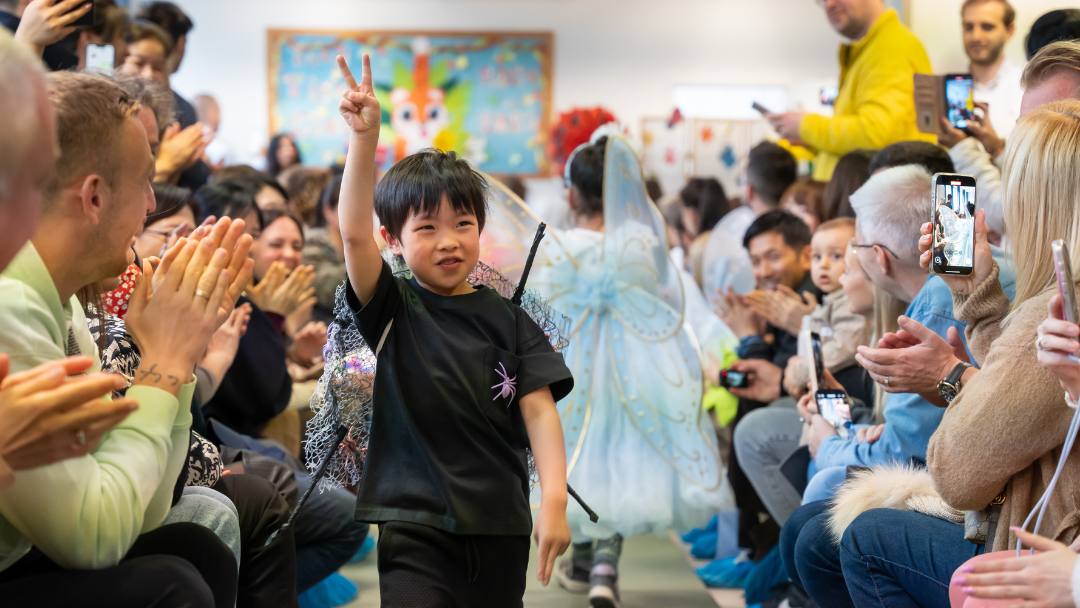
A community event at Happy Kids, showing how a well-chosen nursery or kindergarten in Budapest can support children’s confidence and social integration
What Should International Families Look For?
When choosing a nursery or kindergarten in Budapest, academic programmes often receive the most attention. In practice, relocating families usually focus on different questions:
- Will my child feel secure here?
- How structured is the daily routine?
- How does communication with parents work?
- Does this fit our actual commute and lifestyle?
During relocation, stability often matters more than prestige.
Language and Emotional Support
Children arriving in Budapest may be new to English, new to Hungarian, or new to group settings altogether.
As Petra Kim explains, early emotional security is often the strongest predictor of successful adjustment. In the first weeks, children need:
- Consistent routines
- Warm, responsive adults
- Clear transition processes
- Support for communication through play, repetition, and visual cues
Language development follows more naturally when children feel safe.
When evaluating a nursery or kindergarten in Budapest, it is worth observing how educators handle separation, comfort distressed children, and structure the first days.
Continuity and Age Range
Frequent transitions can amplify relocation stress.
Some families prefer settings that allow children to remain for several years. Continuity in teachers, environment, and educational approach can help children build confidence gradually, rather than restarting adjustment processes.
This is not a requirement, but it is often a practical consideration for international families.
Daily Logistics: The Overlooked Factor
Budapest is geographically diverse. Districts vary widely in atmosphere and accessibility. Commute time, bridge crossings, traffic patterns, and public transport connections can significantly influence daily stress levels.
When choosing a nursery or kindergarten in Budapest, practical alignment matters:
- How long will the commute realistically take in the morning?
- Is parking available?
- What happens if work schedules change?
From a relocation perspective, childcare decisions work best when they align with housing and workplace location.
Understanding “British” and “International” Curricula
Many institutions describe their early years programmes as “British.” In practice, this usually reflects an approach inspired by the Early Years Foundation Stage (EYFS), which emphasises:
- Play-based learning
- Communication and early literacy readiness
- Social and emotional development
- Ongoing observation of progress
For families planning future education in British or international schools, this continuity can feel reassuring.
An “international curriculum” typically refers less to a single formal framework and more to values such as cultural inclusivity, inquiry-based learning, and holistic development.
As Petra Kim notes, what matters most is not the label itself but how consistently the approach is applied in daily interactions and routines.
Relocation and School Choice: Why Alignment Matters
Choosing a nursery or kindergarten in Budapest does not happen in isolation.
Housing, commute, work demands, and neighbourhood dynamics all influence whether a school choice feels sustainable. Through relocation support, Inter Relocation often sees that when these elements are aligned early, children adjust more smoothly.
A setting that seems ideal in theory may become stressful if daily logistics are unrealistic.
Practical coherence supports emotional stability.
A Professional Perspective from Budapest
Happy Kids International Kindergarten and Nursery, led by School Director Petra Kim, works primarily with international families and supports children aged 18 months to 7 years.
In discussion, emphasis was placed on predictable daily rhythms, gradual settling-in processes, and transparent communication with parents—particularly for children adjusting to new languages or cultural environments.
These principles are not unique to one institution. They reflect broader best practices in early years education that relocating families often prioritise when selecting a nursery or kindergarten in Budapest.
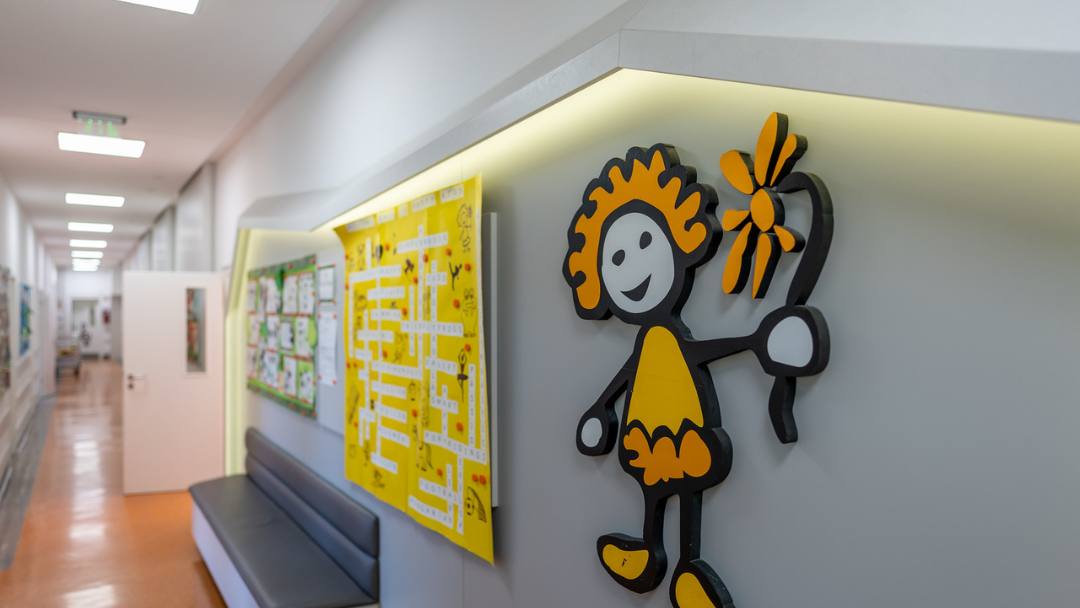
The welcoming interior of Happy Kids—an example of how environment and daily structure matter when choosing a nursery or kindergarten in Budapest as part of a relocation decision
Making a Confident Decision
There is no universally “perfect” nursery or kindergarten in Budapest. There is only the right fit for your child and your family’s new reality.
Visit in person if possible. Observe how children are greeted. Notice how educators speak to them. Ask practical questions about routine, communication, and transition periods.
When emotional security, daily logistics, and educational philosophy align, relocation becomes more manageable—not because change disappears, but because children have a stable place to begin again.
Nursery or Kindergarten in Budapest—Frequently Asked Questions
At what age can children start nursery in Budapest?
Children can legally attend nursery (bölcsőde) in Budapest from six months of age, although most families enrol between 18 months and 2.5 years. Nursery typically supports children until age three, when kindergarten becomes mandatory.
Is kindergarten mandatory in Budapest?
Yes. Kindergarten (óvoda) attendance is legally required from the September following a child’s third birthday. Children must attend for at least four hours per day, regardless of nationality.
What is the difference between nursery and kindergarten in Budapest?
Nurseries in Budapest generally serve children under three and focus on care, routine, and early development. Kindergarten serves children aged three to six or seven and emphasises social development, play-based learning, and school readiness within a structured daily framework.
What should expat parents consider when choosing a nursery or kindergarten in Budapest?
Beyond curriculum, international families should consider emotional support, settling-in processes, daily routines, communication with parents, and realistic commute times. Choosing a nursery or kindergarten in Budapest that aligns with housing and work location can significantly reduce daily stress during relocation.
Does a “British curriculum” in Budapest usually mean EYFS?
In early years settings, a British curriculum often refers to an approach inspired by the Early Years Foundation Stage (EYFS). This typically emphasises play-based learning, communication development, and observation-led assessment rather than formal academics.